
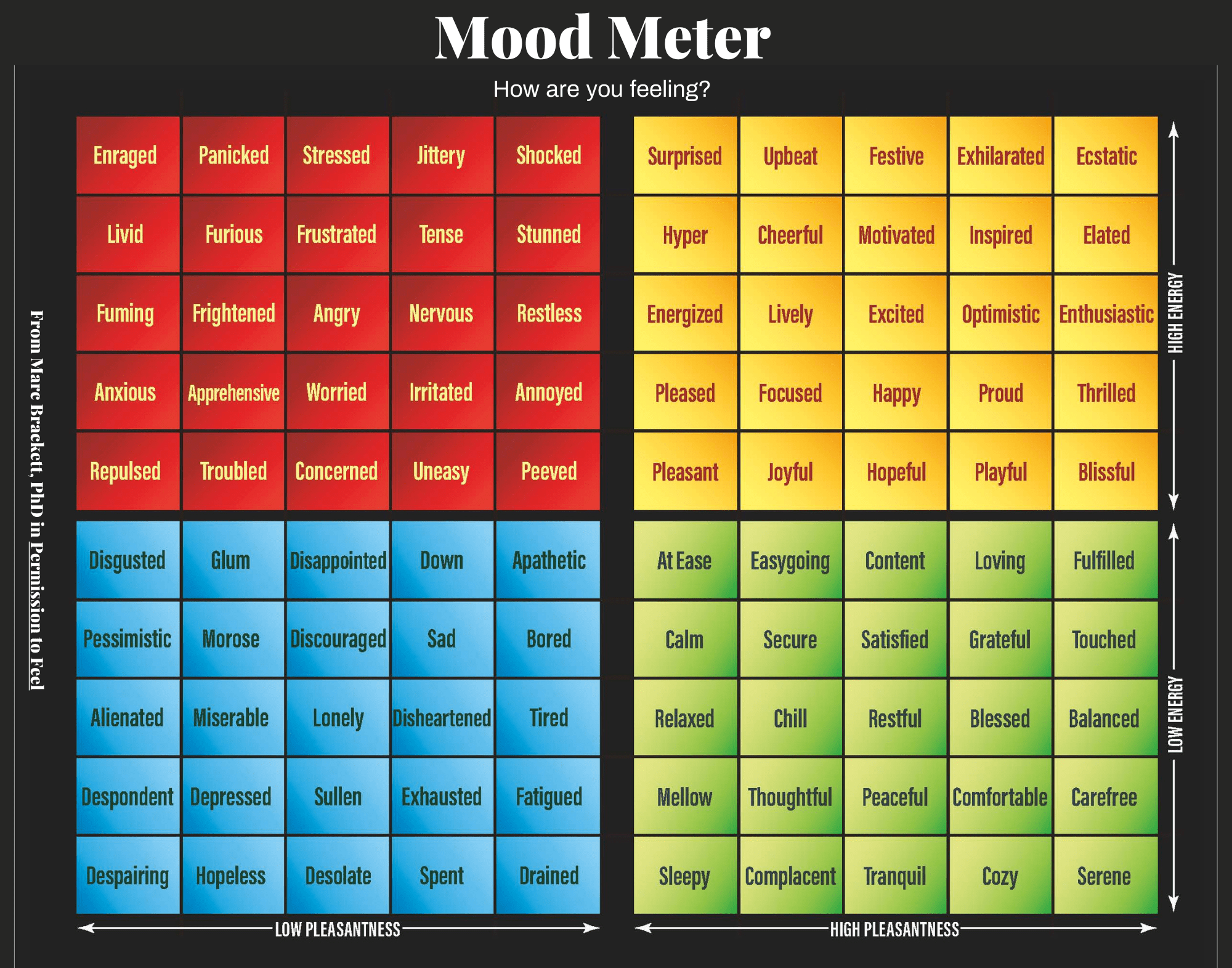
Things are bumpy these days and most of us are experiencing a wide range of emotions every day (every hour?). One way to keep our emotions from running away with us is to identify precisely which emotion we’re feeling. We tend to lump our emotions into broad categories: fear, anger, happiness, sadness. But the truth is, there are many different types of emotions. When we understand which one(s) we’re feeling at any given time, we can determine what we need to do to deal with them and the best way to communicate those needs to others.
There are also significant benefits when leaders embrace emotions in the workplace. According to a recent research study discussed in, “All the Feels: How Companies Can Benefit from Employees’ Emotions” a Wharton School podcast, “When teams have supportive environments where members share their feelings and empathetically respond to each other, they can increase their ability to solve problems, elaborate information, and generate ideas.” When leaders encourage emotional sharing and connection at work, teams function better. Wharton management professor Michael Parke added, “the research is a ‘nice parallel’ to studies done on authenticity and diversity in the workplace because it complements those findings. . . by embracing all types of emotions and working through them, a company can innovate and boost its bottom line. [This is] ’empathetic communication,’ which helps create more authentic environments.”

Embracing emotions at work begins with identifying emotions. The Mood Meter shown above is one example of the range of emotions we might feel. Is it anger or is it anxiety, or frustration, or shock? Are you feeling lonely or just bored, or tired? Many things can make us feel happy, but it helps to be more specific here. Is it gratitude that’s creating the happy feeling or are you feeling proud or hopeful? You can enhance the feeling, and your memory of it, by associating the feeling with where it’s coming from. You can also cut yourself some slack by getting specific about emotions that have a negative connotation: Are you being complacent or are you merely content, or satisfied, or balanced?
When we’re able to accurately name our emotions, we’re able to deal with others more appropriately. If we’re feeling irritable and realize that we’re hungry, we can grab a snack before the upcoming one-on-one. If we know we’re anxious about a board meeting, we can take some deep breaths and calmly think through where the anxiety is coming from and then address it. Too often we go through the day in a reactive state, but by pausing to recognize and identify our emotions, we can become proactive and communicate more effectively.
Professor Parke said, “the most important takeaway for managers – and one they can start doing immediately – is to stop dismissing employees’ emotions. . . most significantly and . . . urgently for leaders is having the courage to deal with emotions, and not just the positive ones, but being curious, validating people’s experiences, not trying to shove them away, not trying to ignore them.”
What steps can you take today to create a supportive environment where team members are comfortable sharing their emotions?
Avenue 8’s Founder & CEO, Danessa Knaupp wrote a book about this called, Naked at Work: A Leader’s Guide to Fearless Authenticity, which shows you how to find the courage to be authentic at work and to encourage others to do the same.
Our team of coaches is ready to work with you. Contact us to find out how we can help.
And if you’re interested in learning more about naming emotions, see the Wheel of Emotions and the Coping Wheel.